From Sole Trader to Pty Ltd: Is It Time?

Weighing whether to start a company isn’t really a ‘go big or go home’ decision. There are a few things to consider, like your business size, level of risk, and growth plans, before deciding if a Pty Ltd structure is right for you.
If you’re currently operating as a sole trader, at some point you’ve probably asked yourself: ‘Should I turn this into a company?’.
It’s a common, and completely fair question. Moving to a company (often a Pty Ltd) can feel like a big step, both financially and administratively. But for the right business, it can also be a smart move. It’s also not something appropriate for all businesses. You need to find the right structure for you and your situation.
This blog aims to give you a clearer understanding of what that transition involves, and help you decide whether it’s worth exploring further.
Pty Ltd company – in simple terms
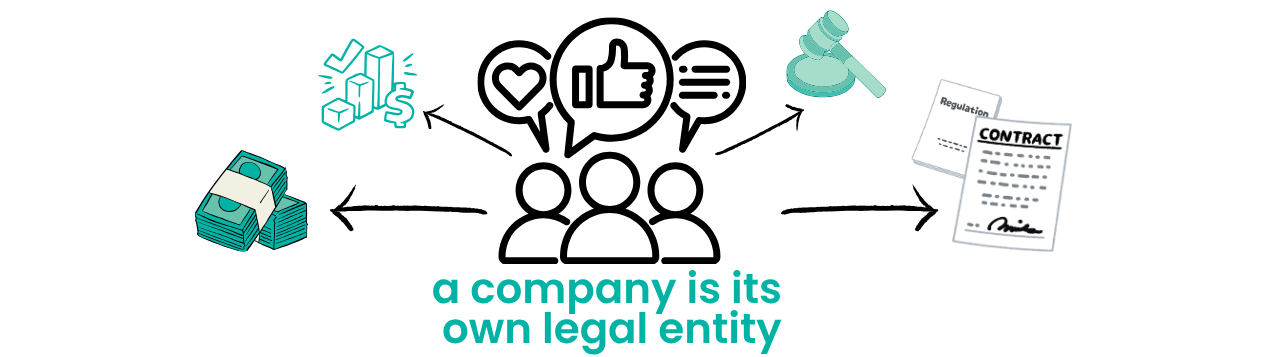
A company is treated as a separate legal entity – essentially its own ‘person’ in the eyes of the law. This means it exists independently from you as the owner or shareholder.
Just like a ‘person’, a company has the ability to:
- earn income and own property
- enter into contracts and buy or sell assets
- take on debts
- sue or be sued in its own name (instead of you personally)
For start-ups and small businesses, the most common company structure is a proprietary company limited by shares, more commonly known as a Pty Ltd.
Key difference: Sole Trader vs Company
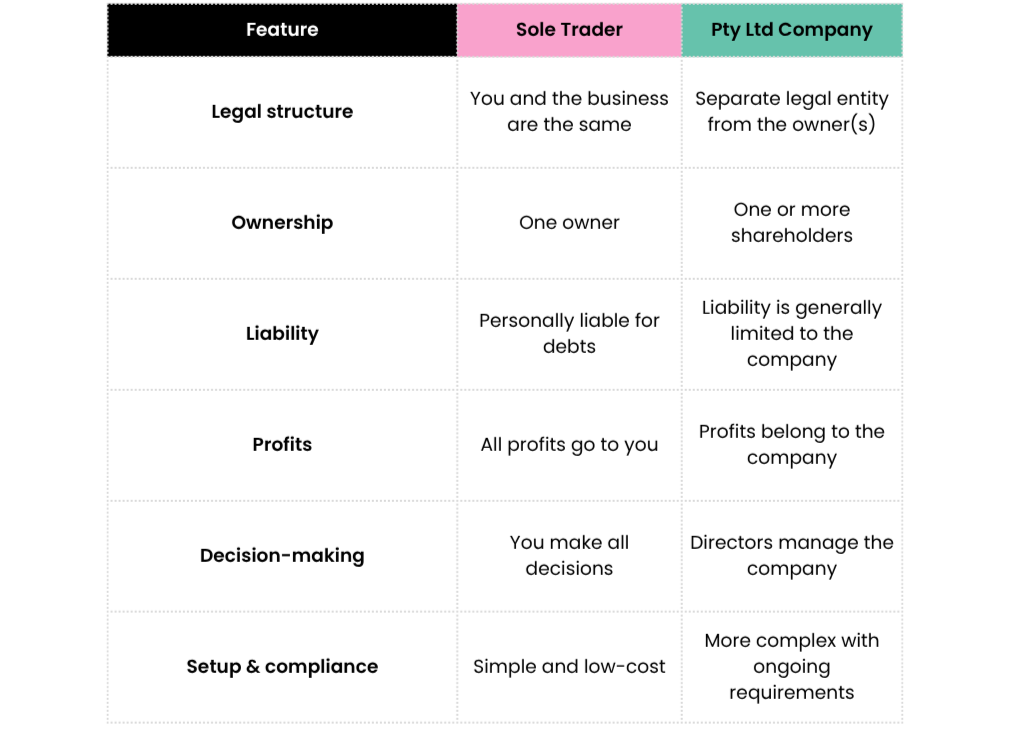
Before diving deeper into Pty Ltd companies, it helps to first understand how they compare to a sole trader structure.
A sole trader is the simplest form of business – one business, one owner. As a sole trader, you are the business. This means one tax return, just with a new section added where you list the business info (income and expenses) and you get taxed on the profit of your business. It also means you are where the buck stops - it is technically you signing deals, owing money, and providing products or services.
A Pty Ltd company, on the other hand, is a separate legal entity from its owners (shareholders). While it can have one or more owners, the business itself stands independently. It lodges its own tax return, has its own bank account, engages in contracts and deals, and provides services and products to its customers.
In this case, you’re not the business… you run the business through the company.
There’s no ‘better’ structure – just what fits your business at its current stage.
Why people choose to incorporate
So, why do some business owners decide to make the shift from sole trader to a company?
Here are a few common reasons taken into consideration:
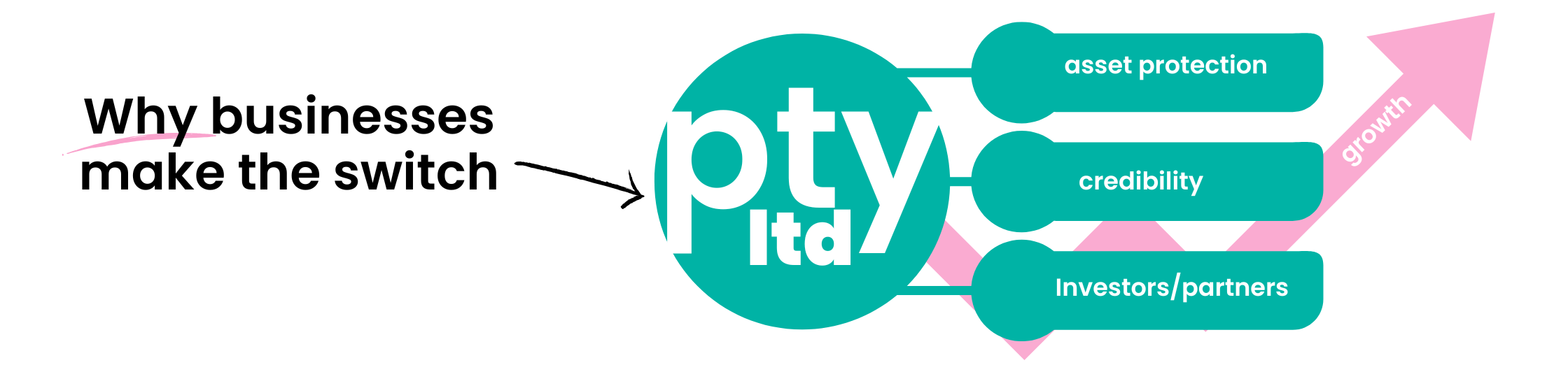
a. Protection of personal assets
One of the biggest reasons is limited liability.
If something goes wrong in the business, your personal assets (like your house) are generally protected, because the company carries the risk – not you. Of course, there are exceptions like personal guarantees, but this is the general idea.
b. More credibility and professionalism
Having ‘Pty Ltd’ at the end of your business name can make you look more established.
This can matter when:
- Dealing with bigger clients
- Applying for contracts
- Working with suppliers
c. Easier to bring in partners or investors
A company structure allows you more flexibility regarding control, financing, and paying people:
- Issue shares
- Add shareholders
- Split ownership clearly
This is much harder to do as a sole trader.
d. Better structure for growth
If you’re planning to scale, hire staff, or expand, a company structure is usually more flexible - you may wish to sell the whole thing one day, or need an investment of money in exchange for shares (part ownership), or you start to deal in bigger numbers and want more flexibility and more protection.
What you need to set up a Pty Ltd company
You’ve decided to go ahead with a company… what's next?
Setting up a Pty Ltd isn’t overly complicated, but there are a few key things you’ll need to sort out first:
- A company name
You’ll need to choose a name that is available and not already registered. - Directors and shareholders
Every company needs at least one director. You’ll also decide who the shareholders are (this can just be you, or you and others). - Registered office address
This is the official address where your company’s mail gets sent. It needs to be a physical Australian address (not a PO box). - Share structure
This is basically how ownership is split. This includes the number of shares and how they are divided among shareholders. - Company constitution or rules
These are the rules on how the company will run. Some businesses keep it simple with standard rules, while others prefer something more tailored. - Registration with ASIC
Your company needs to be registered with the Australian Securities and Investments Commission (ASIC). Once registered, you’ll receive an Australian Company Number (ACN).
It is always recommended that you speak with an accountant and/or lawyer before making this decision, and to assist with the registration and compliance. Once everything is set up, there are a few ongoing things to stay on top of like keeping records up to date and meeting annual requirements.
When does it make sense to switch?
You might consider moving to a Pty Ltd if:
- Your business is growing quickly
- You’re taking on higher financial risk
- You want to work with larger clients
- You’re bringing in partners or investors
- You want a more structured, scalable setup
 When staying a sole trader might still work
On the flip side, staying a sole trader can make sense if:
- Your business is still in its early stages
- You’re operating on a smaller scale and want to keep things simple
- Your risk exposure is low
- You’re not planning to scale yet
- It might be disadvantageous when looking at tax outcomes

Switching from a sole trader to a Pty Ltd company isn’t just a ‘tick-the-box’ decision - it depends on where your business is headed.
For some, it’s the next logical step.
For others, it might be something to revisit later.
If you’re unsure, it’s always worth having a quick chat with your accountant to weigh up what works best for your situation.

References
Case Study Insights | Patricia
Standard Pty Ltd Company | Patricia
Company Types | Asic
Business Basics | Asic